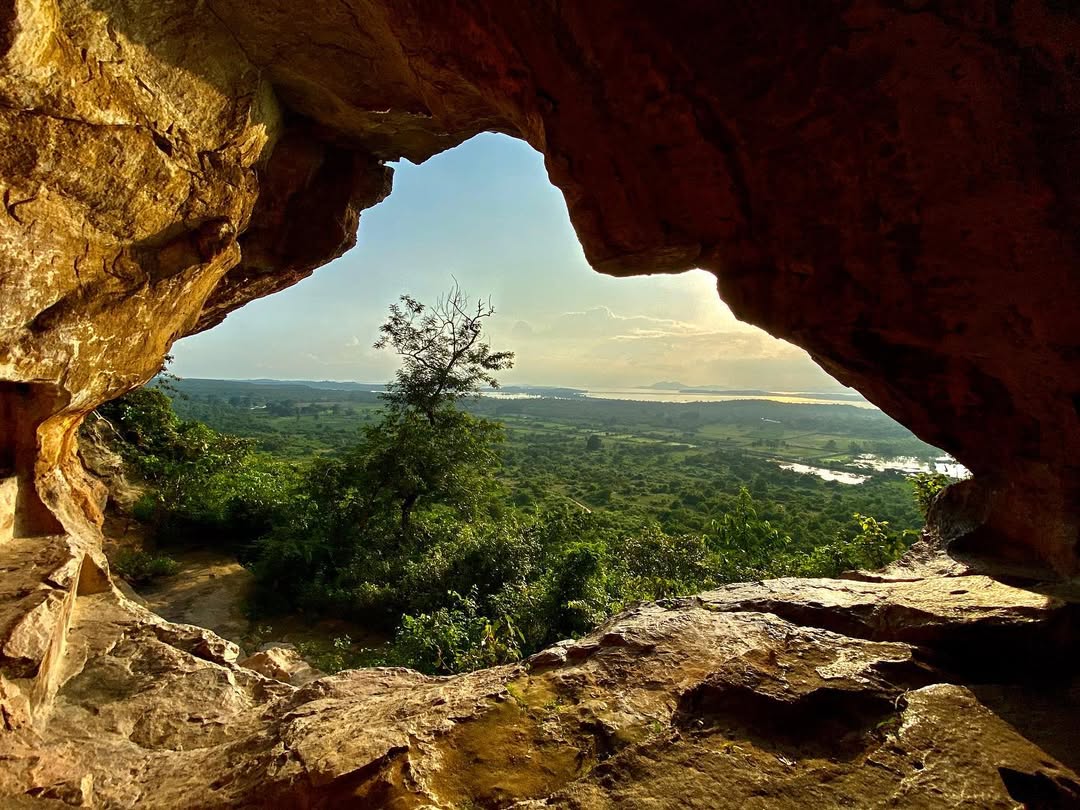
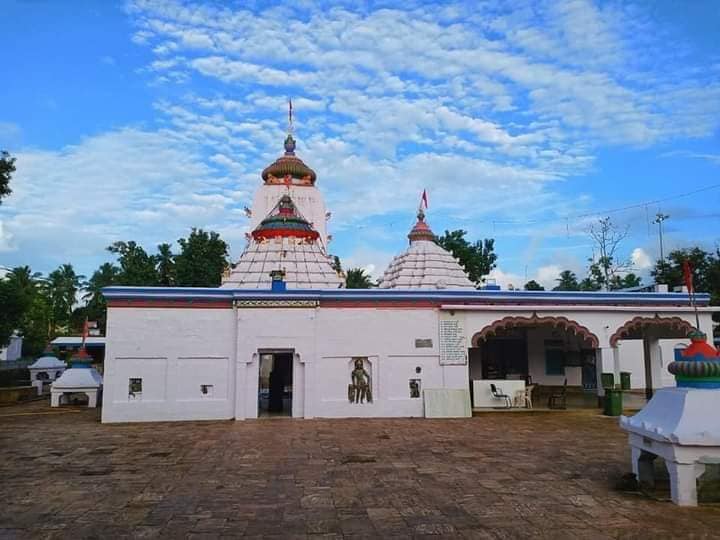
Biraja Temple

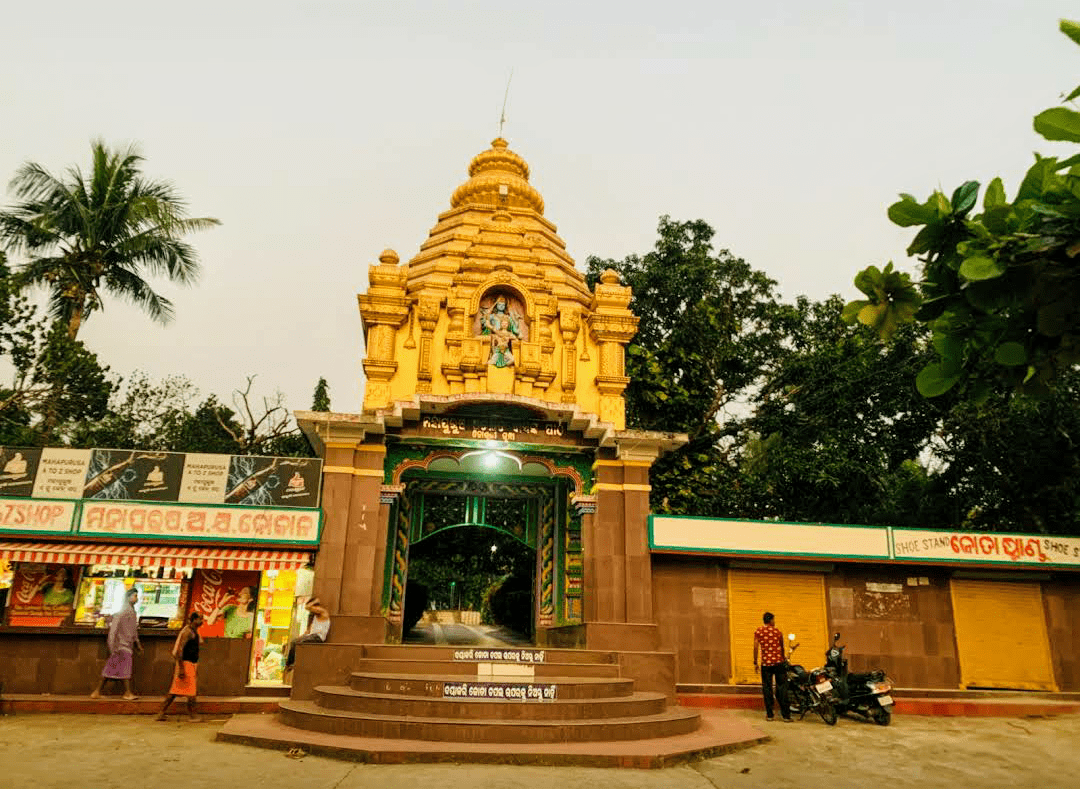
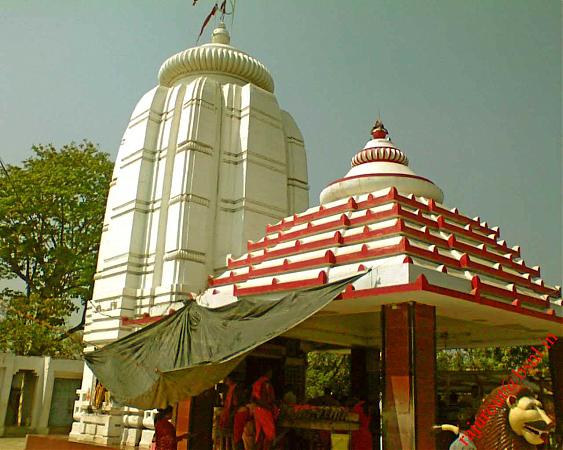
Maa Biraja Temple is a anciental Hindu temple positioned in Jajpur (approximately one hundred twenty five kilometers (seventy eight mi) north of Bhubaneswar), Odisha, India. it’s far known as the Viraja or the Biraja kshetra. Jajpur is thought to have approximately one crore of Shiva lingams. Biraja or Viraja Temple is one of the widespread Maha Shakthi Peetas. Here the principle idol Durga Devi is worshipped as Girija (Viraja) and Lord Shiva as Jagannath.
Table of Contents
Important information
History
Importance
Architecture
Idol
Festivals
Other Temple in Temple Campus:
Temples close to
Temple Timings
Darshan Timing
Aarti, Bhog and Pooja Timing
How to Reach
Temple Video and Images
History

Brahma needed to Parvati and requested her to live on the Kshetra because the extraordinary consort of Siva. Parvati created and concurred Nine Durgas, Sixty Four Yoginis, Eight Chandikas, and requested to live withinside the Kshetra eternally. Due to the lifestyles of this goddess, this land became famous as Shakti Peetha.
Jajati Keshari, a ruler of the Kesari empire built the Biraja temple in Jajati Nagar (now Jajpur) withinside the thirteenth century during the Kalinga time. The deity, Maa Biraja which stands 70 toes from the floors is thought to be worshipped from the fifth Century. The temple is known as after King Jajati Keshari. According to the legend, the vicinity is likewise taken into consideration as Gadakhestra, as Bhimas Gada (mace) became mendacity on this sanctuary. In the front of the temple stand 2 lions simply above the elephant. This is an indication of the success of the Keshari dynasty (Symbol of Lion) than the Gajapati dynasty (Symbol of an elephant) in Orissa. A fantastic Yagna (sacrificial oblation) became done over the frame of Gayasur, (the exceptional satan devotee of Lord Vishnu) via way of means of the Lords Shiva, Brahma, and Vishnu to get rid of the satan. Gayasurs toes have been in Pada Gaya (an area in Pithapuram, Andhra Pradesh), nabhi (Navel) in Biraja Kshetra or todays Jajpur, taken into consideration as Nabhi Gaya and head at Shiro Gaya. The precise place is in a properly this is positioned withinside the Biraja temple sincerely close to to Maa Biraja. Importance Maa Biraja Devi temple is a Shakti Peeth andNabhi Gaya, the various three maximum widespread sites. This is the various couple of temples in which Devi Bagalamukhi has been blessed. ThisRoop` of the Dasa Mahavidya is slightly visible in temples.
Architecture
Ancient evidence verifies a temple became built withinside the 2d or first actual century CE at some point of the Gupta duration. Later on, a temple became built withinside the thirteenth century CE. At this time the temple complicated had severa different temples committed to the specific goddesses. In 1569 the temple complicated became broken via way of means of intruders. It lay in damages for an extended time period until it became reconstructed via way of means of a wealthy Zamindar (Land Owner) in approximately 1840.
Idol
The idol of the Devi withinside the temple well-knownshows Her status on Mahishasura.
Festivals
Triveni Amāvāsyā -the delivery day rite of goddess Biraja is one of the maximum crucial gala’s in temple. The day comes withinside the month of Māgha(January-February) on the brand new – moon day.
Dola Purṇimā – Dola Purṇimā is hung on the total-moon day of the month of fālguna (february-march).
Vāruṇi Festival – Vāruṇi, an auspicious day comes withinside the month of Caitra(March-April).
Mahāviśuva Samkrānti – On the primary day of the sun month of Vaiśakha (April-May) Mahāviśuva Samkrānti or paṇa Samkrānti is held withinside the Biraja temple.
Candana Purṇimā – On the Candan Purṇimā day withinside the month of may-June, the face of the deity of Maa Biraja is smeared with sandal paste. So the day may be very widespread for the devotees.
Sāvitri Amāvāsyā – Sāvitri Amāvāsyā is well known on the brand new-moon day of the month of Jyestha (May-June).
Citālāgi Amāvāsyā –
Citālāgi Amāvāsyā is a unique pageant that celebrated withinside the month of Srāvaṇa (July-August)
Gahma Purṇimā – Gamha Purṇimā is in any other case referred to as Rākṣi Purṇimā that comes on the total moon day of Srāvaṇa (July-August).
Suniā – Festival Suniā is hung on the twelfth day of the brilliant fortnight of the month of Bhādrapada (September).

morning Seba and Aarti 4:00 AM TO 4:30 AM
midday Seba 1:00 PM
afternoon Seba 3:00 PM
evening Arati 7:00 PM
night Seva 10:00 PM

The morning Seva begins offevolved of this Maa Biraja Temple at 4.00 am with Mukha Marjan (Facewash), observed with the aid of using Danta Kastha. Here the deity`s tooth are brushed with Bilwa stick. Then the deity is readied for the royal tubtub with the aid of using making use of Gandhamala, turmeric and sandal paste, sarbaushadhi, and different scented oils. The deity is given Panchamruta snan (liquid aggregate of milk, curd, ghee, sugar, and honey) observed with the aid of using Shudodhaka snan the use of water from sacred Rivers like Ganga and the Baitrani. This is observed with the aid of using Mantropachar in which Purusasukta and Sri sukta are recited to the goddess. Mantropachar is observed with the aid of using Dhoop, Deep, and Naiveidya, and then the deity is open for darshan to all her devotees. (Sahan Mela). The morning seba ends at 4.30 am.
The noon Seva includes Dhoop (burning of incense sticks) and Deep,(lights of lamps). Sweetened rice and different objects are provided as Naivedya to the deity. This is observed with the aid of using Arati (burning camphor), Puspanjali (imparting vegetation and Bilwa leaves to Maa Biraja), Arghya Samarpan (Offering of water), and Mantra Pushpa (recital of sacred mantras). The noon rituals come to a close (Pahuda) at 1.00 pm
The afternoon Seva begins offevolved at 3.00 pm with Mukha Soudha (cleansing of the mouth). This is observed with the aid of using imparting curd blended with sugar after which the deity is opened for darshan to all her devotees. (Sahan Mela)
In the nighttime Arati is carried out observed with the aid of using Pushpanjali (imparting vegetation to the goddess). Then candies are provided as Samanya Naivedya.
The night time Seva begins offevolved at 10 pm with Nitya (normal) upachar puja and boiled rice, dal, etc. It is obtainable as Naivedya. Arati, Pushpanjali, and Arghya Samarpan are provided and then the day involves an end. This is likewise known as night time close (Ratri Pahuda).
How to Reach
By Air: The close by Airport is Bhubaneswar Airport and it’s miles 103 km farfar from the temple.
By Train: The close by railway station is Jajpur Keonjhar railway station and it’s miles 30 km farfar from the temple.
By Road: The close by Bus Stand is Jajpur Bus stand and it’s miles 2 km farfar from the temple.

Lalitagiri

Lalitagiri


Lalitagiri, the sleepy Buddhist archaeological web website online in Odisha, will quickly be withinside the spotlight.
With the show of what’s taken into consideration to be the sacred bone relic of Lord Buddha Himself, the faraway and desolate web website online will quickly be an across the world sought-after non secular tourism spot. Construction of an armoured show facility is nearing final touch in Lalitagiri in which the relic may be competently located for public darshan.
It turned into at some point of massive excavations from 1985 to 1991 that a golden casket turned into found on the Lalitagiri archaeological web website online. Its content – a bone fragment – is assumed to be that of Lord Buddha Himself. It could be applicable to do not forget right here that Hieuen Tsuang, the Chinese Buddhist monk who travelled round in India withinside the 6th century, had defined approximately a fantastic stupa atop a hill at Puspagiri Mahavihara that emitted awesome mild due to its sacredness.
Lalitagiri is taken into consideration as one some of the oldest Buddhist facilities of Kalinga / Utkal (gift Odisha).
Lalitagiri, along side Ratnagiri and Udayagiri, bureaucracy the Buddhist “Diamond Triangle” of Odisha. There is any other greater famous Triangle in Odisha – the “Golden Triangle” – inclusive of Hindu non secular sites, namely, Bhubaneswar, Konark and Puri. The Diamond Triangle spans the Buddhist historical past of Odisha from second century BC to thirteenth century AD. After all, it turned into right here withinside the land of Kalinga that Emperor Ashoka embraced Buddhism after victory withinside the gory Kalinga War. The ruins of Lalitagiri encompass 4 spacious monasteries, a significant chaitya with limitless votive stupas of various dimensions unfold all round, and a Maha Stupa.
Also referred to as Naltigiri, it’s far in Cuttack District and is ninety km. from Bhubaneswar, capital of Odisha, and 14 km. from Ratnagiri, any other factor withinside the Diamond Triangle. The web website online is sandwiched among Parabhadi and Landa hills of the remoted Assian variety and lies withinside the Birupa-Chitrotpala valley. The archaeological treasures of the hills and its region have been first introduced to mild in 1905 through the then Sub Divisional Officer of Jajpur, M.M. Chakravarty. Subsequently, a reference of Lalitgiri withinside the Memoirs of Archaeological Survey of India (ASI) is discovered in 1927-28 through R.P. Chanda of Indian Museum, Kolkatta. But it turned into best in 1937 that the web website online turned into declared a centrally blanketed monument. And it turned into best after any other 4 a long time in 1977 that a small scale excavation on this hillock turned into initiated through Utkal University; sadly, through then a great deal might have been misplaced and vandalised.
Maha Stupa – Atop a sandstone mound that offers a calming and panoramic view of the fields close by and hills afar, stands aloof a Maha Stupa of bricks, measuring 36 meter in circumference. From the hillock it must were a watch complete of greenery however whilst we visited in January, because the harvest turned into over, the fields have been all dry with a coloration of fading inexperienced and developing brown. Major excavations through ASI at some point of 1985-ninety one found out the Maha Stupa however in a significantly broken condition. Luckily, the golden casket with Tathagata`s bone relic turned into discovered competently mendacity inside this Maha Stupa! Hence it profits non secular, archaeological and ancient importance of a totally excessive order.
The relic: It turned into interior this Maha Stupa that a votive stupa of khondalite stone turned into discovered. Within this stone field have been discovered a steatite, a silver and a gold casket, located interior one any other. The innermost gold casket contained the relic or dhatu withinside the shape of a small fragment of bone. As the bone fragment is so carefully preserved inside 4 caskets – of stone and of valuable metals – it’s far believed to be that of the Lord Himself. These un-inscribed caskets have been organized withinside the way of a Chinese puzzle box. The discovery of relic caskets at Lalitagiri turned into the primary of its type in jap India. The steatite (soapstone) casket is a properly-polished and easily completed one; soapstone turned into likely selected for its excessive heat-resistant quality.

Chaitya – Further excavations unearthed a massive, semicircular chaitya (temple / prayer corridor with a stupa at one end) and 4 monasteries on the foot of the mound. The east-dealing with brick constructed apsidal (semi round) chaityagriha measures 33 x eleven m with a 3.3.m thick wall and a round stupa at its center. The discovery of such an edifice is likewise first of its type withinside the Buddhist context in Orissa. Votive stone stupas of various dimensions are discovered located round this chaityagriha. They have been all too large for my pocket! Wish I cad thoughtfully carried a trolley suitcase. Basement stays of many different structures (round, rectangular and rectangular) additionally cluster its surrounding.
Monasteries – Four brick-constructed monasteries have been found; of these, the east dealing with double storied monastery (No.1) is the biggest measuring 36 squaremtr (externally) with its important courtyard by myself measuring 12.nine sq. m.
Datable to tenth-eleventh century AD, it has a massive brick constructed cistern abutting the herbal bedrock at its backside, intended likely for storing rain water. But we didn’t word it. Partially uncovered monastery (No.2) in the intense north aspect of the hill turned into constructed at some point of the decadence segment of Buddhism at Lalitagiri. Monastery No. 3 (28 x 27 m), dealing with south-east, has an eight sq. m important courtyard; believed to be the earliest withinside the complex, it is going properly with the ultimate segment of apsidal chaitya. No. four monastery (30 sq. m) faces west with a large headless Buddha photograph withinside the sanctum. A terracotta seal of 9th-tenth century discovered in this type of monasteries reads out as Sri Chandraditya Vihara Samagra Arya Bhiksu Sangha.
The brick partitions have many folds that deliver an ordinary conventional contact to the complete structure. The rooms have door frames indicating all of them had a few provision for remaining the entrance. Some rooms are supplied with niches, likely for deities or non-public belongings. The monasteries are relatively in a higher state; even as the chaitya is nearly flat, the monasteries stand nearly to the lintel level.

Olasuni Hills

the Beautiful Olasuni Hills


The well-known Olasuni hills of Odisha were an area of notable appeal for pilgrims and travelers alike however recently, it’s been dropping its appeal attributable to nearby intervention and an absence of presidency interest to hold its particular records. The shrine of Arakhita baba is placed amidst the lovely Olasuni hills, which has a lovely story to narrate.
Odisha is enriched with many webweb sites redolent in records and memories of the beyond glory and thriller and one such vicinity is the Olasuni hills.


This vicinity is located alongside the lovely banks of the Gomati river, additionally called the Gobari river.
It falls along the National Highway five-A main to Paradeep, withinside the divided Jajpur district of Odisha.


How to attain Olasuni hills:


You can attain Olasuni hills from Bhubaneswar railway station, which is set 100km away, or from Cuttack railway station, which is set 73km away and the closest airport is Biju Patnaik International Airport in Bhubaneswar from in which it takes you round 1.five hours to attain Olasuni hills with the aid of using avenue.


Site of importance:


The spiritual Gumpha yatraof Olasuni hills attracts devotees, and in this competition the vicinity comes alive with devotional and cultural activities.


The cave competition or gumpa yatra is well-known for a saint named Arakhita. In the reminiscence of Saint Arakhita, on his demise anniversary, this cave yatra is conducted.
Legend-Olasuni-Hills-Utkal-Today
Image- Pinterest
Also Read: Barunei Hill- the exceptional Picnic spot in Khordha
The legend of Olasuni hills:
According to legends, Saint Arakhita who lived right here 3 centuries in the past become in advance called Balbhadradev. He become born in Badakheimendi, to a royal own circle of relatives of Ganjam. But on the age of 15 he determined to go away domestic and live with saints for non secular liberation.
This call Arakhita become given to him with the aid of using a widow who mistook him as a thief looking to steal, at the same time as he become simply accumulating banana leaves from her outside at night.
Saint Arakhita wandered lengthy and extensive till he eventually selected Olasuni hills as his Sadhna Pitha (Place of meditation).
Following the Arakhita tradition:
After the demise of Saint Arakhita, the cave was a holy shrine and have become an area of pilgrimage for his devotees and fans.
His disciples comply with the idealism of Abadhuta Bada, in which devotees aren’t divided primarily based totally on caste, faith or creed.
As in step with dictum of the saint, devotees are entitled to provide any sort of meals because the saint taken into consideration all meals gadgets ate up with the aid of using humans as prashad. Strangely, the devotees and fans of the saint pay recognize with the aid of using presenting him meat, liquor and fish. It is likewise believed paying meat and fish can satisfy wishes.
And ironically, the saint become a strict non vegetarian.
Cave-Festival-Olasuni-Hills-Utkal-Today
The cave competition of Olasuni hills:
This cave competition is well known for an afternoon however the honest maintains for a week. Moreover to enhance traveller capability of the spot, the Government of Odisha organized a visitor residence and park which affords electric powered power, water deliver and everlasting avenue to the Olasuni hills.
However this competition has misplaced its spiritual appeal and now this vicinity has was a citadelress for children to eat liquor, bhang and smoke ganja overtly withinside the call of Abadhudtabada. Traditional bhajan and kirtan also are dropping their originality and have become changed with the aid of using contemporary-day melody.
A far off vicinity and loss of life way of life may be unhappy however it’s miles essential for us to discover Olasuni hills due to the fact the greater the quantity of travelers go, the greater the authorities will be aware of revive its conventional importance and could make the vicinity safer.
Olasuni hills are nevertheless well-known for its scenic bounties and its secular shrine and need to pay a go to to this vicinity as it’s miles important for us to consider its specific memories. So that now no longer best we will hold the competition`s proper spirit intact and now no longer allow its particular records shrink, however additionally be a part of maintaining this valuable legend.

Saranda Garh

Saranda Garh Hill Top ParkThis warm house of Saranda Garh is a great spot to visit in India. Later y…
Read More

Ansupa Lake Cuttack, Odisha Ticket Price | Timing

Ansupa lakeAnsupa lake is located 50kmfrom Cuttack and situated in the middle of the state highway c…
Read More